
A conversation with a legendary MMA fighter changed my mind…
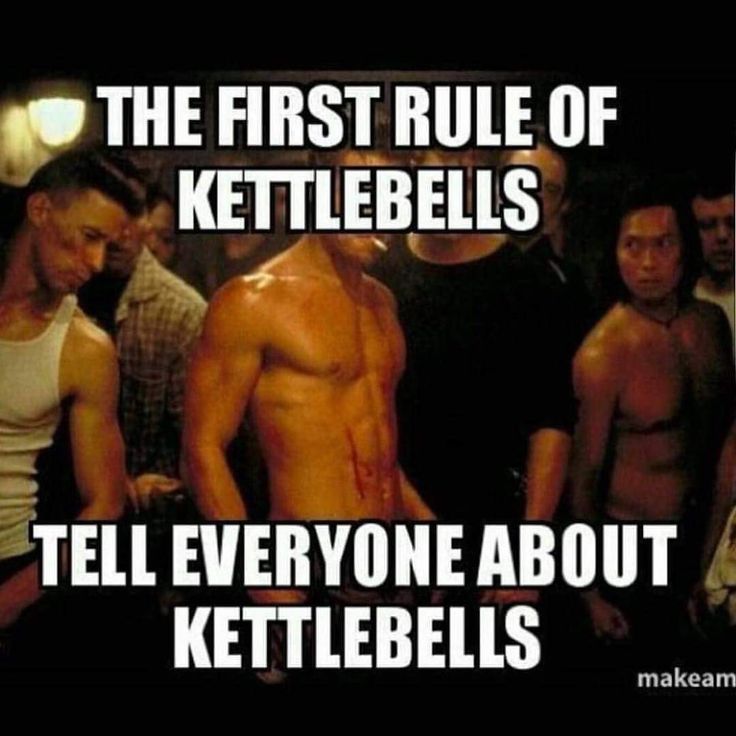
I’ve always had an odd relationship with kettlebells.
The concept of swinging a weight isn’t new. In India, they’ve been using kettleclubs (or “Indian clubs”) for centuries. In the Middle East, there’s a tool that looks like a kettlebell on a long club handle. In Asia, there’s a long history of unstable weights on sticks for wrist strengthening. Europe gave us battle mace clubs for training. Even a young country like America had York Barbell introducing the swinging dumbbell handle back in the 1950s.
So swinging and pressing a ballistic weight that extends beyond the hand (the key difference from a traditional dumbbell in certain moves) has been around forever. But what does it give us that regular weights don’t? Or is it just a remnant from before weight-training gear became globally systematized in the late 1800s?
As a trainer, I’ve wrestled with these questions for over a decade. I’ve read everything Pavel Tsatsouline wrote on the subject (I like him, but his hyperbolic style often makes me skeptical). Still, the first time I picked up a kettlebell, it didn’t just feel “right” or “different”—it felt necessary. I couldn’t articulate why right away.
For the next 12 years, the kettlebell and I had this weird, undefined relationship. I’d play with them during regular workouts (around 2010, they started popping up everywhere—Walmart, LA Fitness—and became mainstream overnight). I loved the rotational feel on overhead presses and later experimented with workouts from Mark Hatmaker’s No Holds Barred book. When I started incorporating Olympic-style lifts into my “Combative Strength” method, I adapted the kettlebell for snatch training—and it worked great.
All of that still didn’t explain what the kettlebell really is. Lifting stable weights is obvious. Olympic lifting makes sense once you get it. Roadwork and calisthenics are bread-and-butter basics. But why this cannonball thing?
The answer hit me this year.
A certain old-school MMA fighter trains at one of the gyms I visit. I respect this guy’s opinion 100%—his experience backs it up. I was starting my usual laps on the mat when I saw him throwing two medium kettlebells. Nothing fancy: single-hand swings, overhead presses, power cleans. Just the basics. I’d seen it before, but seeing someone so no-nonsense use them impressed me. So I had to ask: Why does he think they’re important?
In a nutshell, he said the force demands on the body from a kettlebell are very similar to what you experience in a real fight. He explained it in terms of controlling your body not just during the obvious acceleration phase of a movement, but also during the deceleration phase. And this has to happen ballistically, in unstable, moving patterns, over extended periods of time.
It immediately clicked. My mind flashed back to all those grappling and striking sessions—the “in-between” feeling of what was physically demanded. Almost a little bit of every domain, but in a very uneven, varying way. If you’ve ever “gassed” during training, you know this feeling intimately.
I could suddenly see the kettlebell as a tool that “glues” all the other training domains together in a dynamic way (the author of the IKKF textbook describes it similarly). Overnight, it went from an interesting side item to part of the main course in my training—and now in my clients’ programs too.
Not a single day goes by without at least some type of kettlebell swing. Their physiques and performance are all the better for it.
Want to add kettlebells the right way to your strength routine? Hit me up—we can build it into your baseline PT or tune your current program.
Ready to Get Started?
Call or Text (817) 668-3592 to schedule your FREE consultation.
We’ll discuss your goals, training history, schedule, and any injuries or limitations you may be dealing with. No pressure. No obligation. Just a chance to see if Ronin Fitness is the right fit for you.
About Lex Ronin
Lex Ronin is the owner of Ronin Fitness of Richardson, a private 1-on-1 personal training studio serving Richardson, Plano, Garland, and the surrounding North Dallas area.
A former U.S. Army (Active and Guard) serviceman, EMT-Paramedic (SWAT Medic Certified), martial arts instructor, and strength coach with more than 20 years of experience, Lex specializes in helping adults 35 and older build strength, lose fat, improve health, and train safely around injuries.
Helpful Links
- About Lex Ronin
- Personal Trainer Richardson
- Knowledge Center
- What People Are Saying
- Lex Ronin’s Blog
- Lex Ronin Books
Contact
Ronin Fitness of Richardson
800 E Arapaho Rd Suite 112B
Richardson, TX 75081
Call or Text: (817) 668-3592
Email: contact@roninfitnessofrichardson.com